

Surviving the Freeze: How Arctic and Antarctic Life Thrive in the Cold

The Arctic and Antarctic are among the harshest environments on Earth. These polar regions are characterized by extreme cold, icy seas, months of darkness in winter, and in many places, almost permanent ice cover. Despite these extremes, life still thrives underneath and within the ice. Many species are uniquely adapted to survive and flourish in polar habitats. These adaptations allow the organisms to find food, reproduce, and protect themselves in an environment that would otherwise be deadly. From single-celled algae to some of the largest marine mammals, here are five fascinating polar adaptations that showcase nature’s natural resilience.
1. Ice-Gliding Diatoms
At the very bottom of the Arctic food web are diatoms, microscopic algae that live inside the sea ice itself. While many diatoms in temperate regions are passive and drift with currents, Arctic ice diatoms comprise species that can actively glide, similar to diatoms found in other climates. Through biological adaptations, they can actually glide across icy surfaces. What makes this possible is the production of a sticky substance called mucilage. Mucilage allows the diatoms to stick to ice crystals and slide over the frozen material. This behavior allows them to move towards pockets of ice that lay closer to the surface where light penetrates, which is essential for photosynthesis. It also helps them locate and travel to more nutrient-rich areas of the ice that collect more nitrogen or phosphorus, allowing them to grow efficiently.
Scientists recently observed this unique ability inside ice at temperatures as low as 5 degrees Fahrenheit (-15 degrees Celsius) during Arctic expeditions. By combining laboratory experiments along with mathematical modeling, they discovered that these diatoms utilize their energy and mucilage properties to maintain mobility even in freezing conditions. Ice-gliding is a great example of behavioral plasticity, the ability to change their behavior in response to environmental conditions, in one of Earth’s simplest organisms. And it is a great example of how even the smallest organisms have the potential to influence the overall productivity of polar ecosystems.
2. Antifreeze Proteins in Arctic Cod
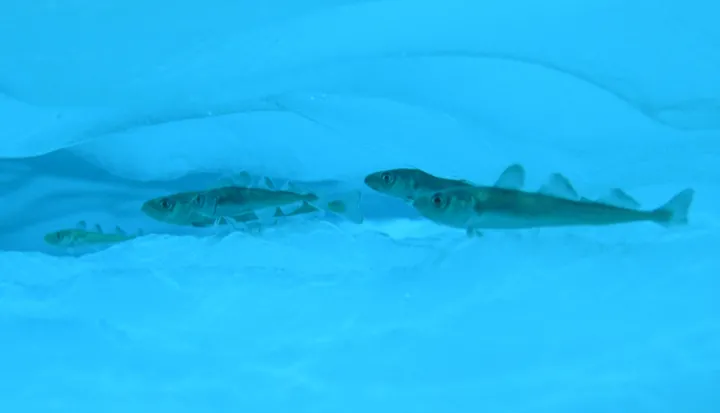
Most fish freeze at temperatures near zero degrees Celsius— not Arctic Cod. These hardy fish can survive comfortably below this point thanks to antifreeze proteins throughout their bodies. The special proteins reduce the freezing point of ice, which prevents the formation of ice crystals in the blood. Working like a microscopic shield, the proteins prevent ice damage to the fish’s tissues. Even the smallest ice crystals have the potential to burst cells and cause death, which is why many fish species are unable to exist in frozen environments. By producing and circulating these antifreeze proteins, Arctic Cod can focus on hunting under the sea ice year-round, despite the temperature in the water. Survivors in Arctic extremes play a vital role in Arctic food chains by providing a food source for seals, whales, and even humans.
3. Polar Bear Cold Armor of Fur and Blubber

Perhaps the most iconic animal of Arctic survival is the polar bear. Their impressive size, with males weighing up to 1,300 pounds, and thick layer of insulating blubber protect them from freezing temperatures that can dip to below minus 40 degrees Celsius (-40 Fahrenheit). The blubber, which can be up to 4.5 inches (11 cm) thick, stores energy and serves as a thermal barrier. Polar bear fur adds another layer of protection. Surprisingly, polar bear fur is not actually white. Each hair is a transparent, hollow tube that traps air and provides insulation. The hair appears white to the human eye and other animals for camouflage against snow and ice. Also, their hairs let sunlight reach the bear’s black skin underneath which allow them to absorb and retain heat.
Additionally, polar bears have several adaptations in their anatomy to help live in the cold. Long necks and elongated snouts may help them regulate heat loss and improve their sense of smell, which is critical when they’re hunting seals underneath the icy waters. Their wide paws distribute their weight across the snow and ice and assist in preventing them from breaking through thinner ice sheets. Together, all these adaptations make polar bears apex predators that are greatly aligned with life in the freezing Arctic conditions.
4. Whales Built for Polar Oceans
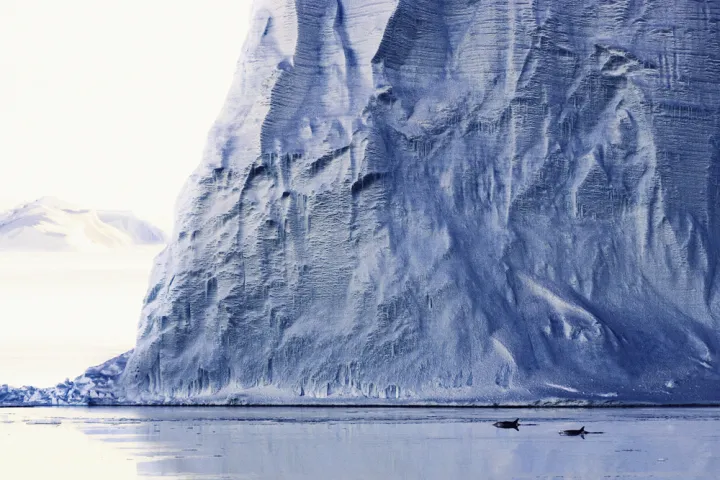
The frigid Arctic seas are home to whales such as belugas, narwhals, and bowheads, each one perfectly adapted to their icy realms. Their most prominent adaptation is the thick blubber layer that can sometimes exceed 7 inches (20 cm) thick, insulating their bodies from the freezing cold waters and providing an energy reserve for long migrations or fasting periods. However, more lies beneath the skin. These whales have specialized parts of their circulatory systems that minimize heat loss called counter-current heat exchangers. Inside their flippers and tail flukes are blood vessels and arteries arranged very close together but with blood flowing in opposite directions. Warm blood going out to the flipper in the vessel passes the heat to the cold blood coming back through the artery to the whale’s body. This way, the cold blood is warmed up before it reaches the body’s core, and less heat is lost to the cold water. It’s like a natural, heat-saving system that helps the whale stay warm without using extra energy.
Their ability to navigate under sea ice is also quite impressive. As air-breathing mammals, whales must come up to the surface, but in ice covered water this becomes difficult. These polar whales find and remember breathing holes or open water patches in the ice and often use vocalizations to communicate and coordinate movements even in low visibility. This navigation and social behavior is critical to surviving polar winters when the ocean surface is mostly frozen over.
5. Antarctic Krill’s Seasonal Metabolism Shift

.jpg)
Antarctic krill, small shrimp-like crustaceans, are the foundation of Southern Ocean food webs. Down at the bottom of the world, the Southern Ocean is an area that experiences huge seasonal swings. During the summer, plenty of sunlight fuels massive blooms of phytoplankton that the krill feed on. However, when winter comes, the food becomes scarce, and the sea ice covers most of their habitat. Krill are omnivorous and can obtain additional energy by feeding on other sources besides phytoplankton. Juvenile krill especially depend on ice algae found beneath the sea ice as an important food source. Krill survive despite a lack of food by undergoing a seasonal metabolism shift. In the winter, they enter a state that is like hibernation and slow their metabolism to conserve energy. During this winter state, krill undergo an ontogenetic migration, moving deeper into the water column to help with their survival. They can survive for months on limited food while hiding under the ice or burrowing into seafloor sediments. Scientists believe that this change is caused by light-related cues, letting the krills’ metabolism adjust and regulate in response to the seasonal shifts.
Since krill are the foundation of the Antarctic food web and feed predators like penguins, seals, and whales, the ability to “pause” a krill’s metabolic activity until conditions improve is vital to not only krill survival, but the entire ecosystems. Krill adaptations also highlight the importance of energy efficiency and timing of life cycles in polar ecosystems.
Polar Survival in a Changing World
Surviving in the Arctic and Antarctic oceans requires extraordinary adaptations. From microscopic diatoms gliding on ice to polar bears insulated by blubber and fur, life in these extreme environments showcases the power of evolution. Understanding polar adaptations is not only fascinating but is also essential as climate change rapidly alters these already fragile ecosystems. By studying these adaptations, researchers hope to predict how species might cope with rising temperatures, melting ice, and the responding shift in food webs. The future of many polar organisms depends on their ability to remain resilient. For thousands of years, they’ve endured the polar extremes though adaptation, and now their continued existence relies upon adjusting to the changing world.