


Climate Change
Introduction
Today, carbon dioxide (CO2) levels in our atmosphere are the highest they've been in 15 million years. It's the cumulative impact of an ever-expanding population―7 billion people and rising―and an ever-increasing thirst for energy, requiring 24/7 electricity, factories, cars, trucks, planes and more. CO2 and other gases, like methane and nitrous oxide, amplify what is called the greenhouse effect. Historically, this has been a good thing. These gases trap heat, making the atmosphere warm enough for the earth to sustain an enormous diversity of life, including people. But over the past 150 years since the industrial revolution, greenhouse gases have shot up by 30 percent, rapidly raising Earth's global temperature. This trend could spell disaster. Higher CO2 levels have altered the chemistry of the ocean―making it more acidic. The ocean plays a key role in regulating climate, absorbing more than a quarter of the carbon dioxide that humans put into the air. But the ocean is struggling to keep up with rising CO2 levels. And thousands of plant and animal species could go extinct without time to adapt to a warmer planet. Humans, too, could be forced to leave their homes from the multiple impacts of climate change.
Science
Research
Tales of Climates Past
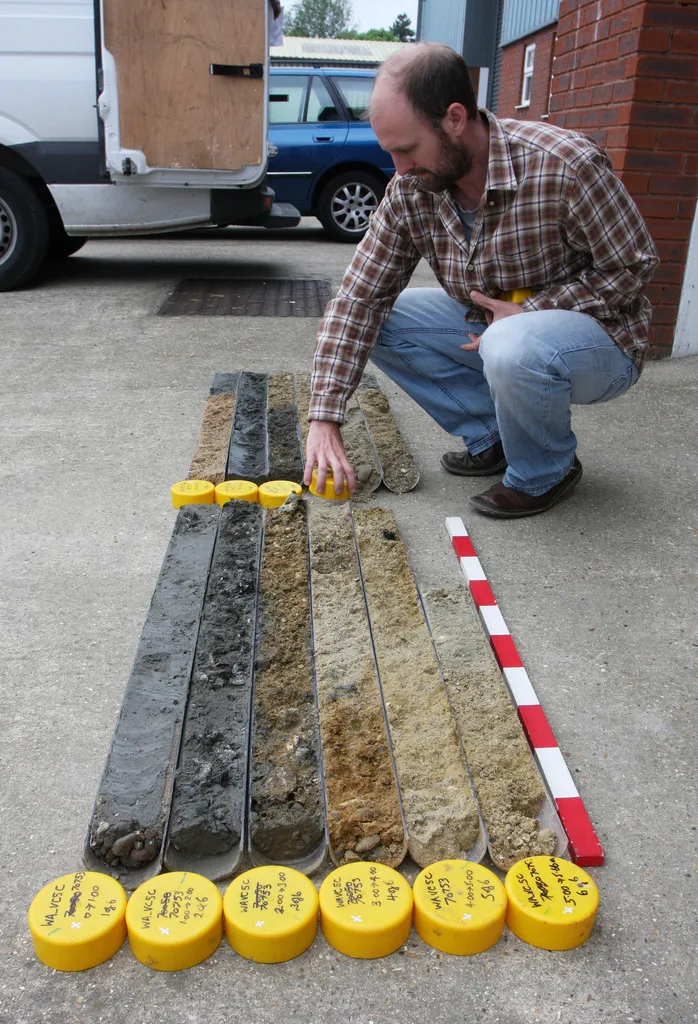
How do we know if the changes in Earth's climate today are an aberration due to human activities or just one more chapter in a 4.6-billion-year-long story? One way is through the study of cores from ice and ocean sediments. Like tree rings, each layer in the core records conditions about the atmosphere – oxygen isotopes, methane concentrations, dust content, even volcanic eruptions – in the sediment and dead microorganisms such as foraminifera.
The evidence shows that in the 1800s, as the Industrial Revolution took off, atmospheric CO2 concentrations begin an unprecedented upward climb, rising rapidly from 280 ppm (parts per million) in the early 1800s to a current level of 376 ppm. Data from core drilling has also enabled scientists to make a connection between rapid climate change and shifts in ocean circulation patterns.
Collections
Climate Clues from Tiny Organisms

How could something no wider than a human hair teach us about climate change? Smithsonian Paleobiologist Brian Huber can answer that question. Brian studies single-celled organisms called foraminifera, ‘forams’ for short. These microscopic creatures have lived in the ocean for more than 500 million years, and the skeletons of forams from years pasts are buried in layers as they settle on the seafloor.

The Smithsonian has a foram collection holding hundreds of thousands of different species. By looking at the distribution and density of forams in layers of sediment, scientists like Brian can discover clues to how the ocean and climate have varied through time.
Technology
Bountiful Buoys

Don't think oceans, plural; Think ocean, singular. Although we divy the ocean up into various sections -- the Atlantic, Pacific, Indian, etc. -- it is actually one big global ocean, a single body of water, without breaks or boundaries encircling the Earth. From the Arctic ice through the warm equatorial waters to the Antarctic circumpolar current, all the Earth's ocean basins, are connected.
Keeping track of all that movement is GOOS -- the Global Ocean Observing System. Twenty-four-hours a day, seven days a week, sensors on GOOS instruments log data about the ocean's temperature, salinity, tides, currents and more from thousands of buoys, floats, tide gauges and other instruments. These data are critical for building accurate models of how the climate will change as more greenhouse gases are added to the atmosphere.
Scientists
Kathy Crane

The Arctic – the very word makes us shiver. This part of the planet is changing before our eyes. Measuring those changes is the job of Dr. Kathy Crane and her colleagues, members of the RUSALCA mission. RUSALCA stands for Russian-American Long-term Census of the Arctic, and is a joint scientific venture to shed light on waters that border both Russia and the United States. The team is asking the most basic questions: What lives here? What is migrating to the Arctic? How are the currents changing through space and time? In the Arctic, time is of the essence as permanent year-round sea ice is moving toward becoming a thing of the past.
Threats & Solutions
Ocean Acidification

More than one quarter of the CO2 released into the atmosphere ends up in the ocean. The huge increase in CO2 over the past 100 years is shifting the ocean's chemical balance and increasing the acidity of seawater -- a process called ocean acidification.
Changing the ocean's chemistry could spell trouble for animals that need more basic (less acidic) seawater to grow hard shells. The shells of sea snails (pteropods) in the Southern Ocean are already noticeably dissolving. Corals, too, may have difficulties growing in seawater that becomes more acidic. The shifts in pH might be small, but their consequences could be devastating. And it could end up having a powerful ripple effect, dramatically altering the ocean food web and eventually affecting what appears on your dinner plate.
Sea Level Rise
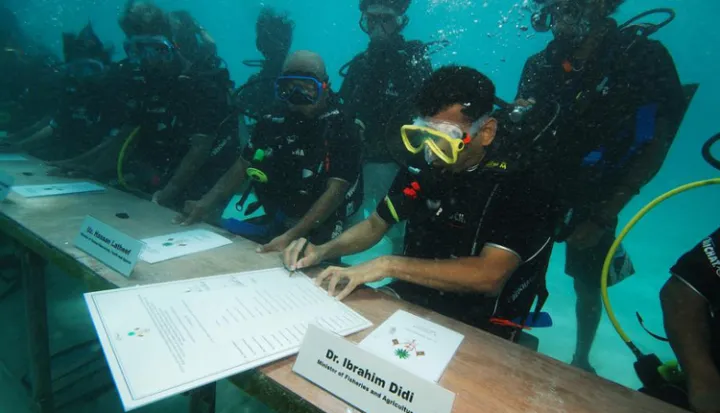
On October 17, 2009, the ministers of the island nation of the Maldives held a cabinet meeting underwater to make a vivid point – rising sea level due to climate change threatens to wipe out their entire country. Sea level is rising today for two main reasons: 1) the melting of glaciers on land and 2) thermal expansion of ocean water. (When water gets warmer, it expands.)
Recent scientific predictions suggest that sea level will rise by 1 meter (3 feet) within the next 100 years. This would mean huge areas of coastline, from Alaska to Florida, would be underwater. Rising sea level also means more coastal flooding during storms. Read more on our Sea Level Rise overview page.
Melting Ice

Drip, drip, drip. That's not your leaky faucet -- it's the sound of melting glaciers on land and melting ice floating on the water. From the Arctic to the Antarctic Peninsula, the Earth is losing ice at a rapid rate. As a consequence, animals have to adapt. In Alaska, fish like Bering Flounder, Pacific Cod and Walleye Pollock have moved north to the Beaufort Sea as their home waters have become warmer. For polar bears, who depend on sea ice for hunting, the forecast is dire – potentially a loss of 2/3rds of the entire species within 50 years.
Ripple Effects

Climate change is transforming ecosystems across the globe on an extraordinary scale at an extraordinary rate. It’s a ripple effect, triggering a cascade of impacts on animals and ecosystems. Some species are moving into new territories. Others are losing their food supplies or ability to feed. Take walruses, for example. Walruses dive off sea ice shelves to feed on creatures living on the seafloor. In 2007, warm temperatures pushed the sea ice beyond the edge of the continental shelf. That meant the water was too deep for the walruses to feed. For the first time in recorded history, thousands of walruses jammed along the beaches near Wainwright, Alaska. The crush resulted in the deaths of many walrus calves.
Policy Strategies
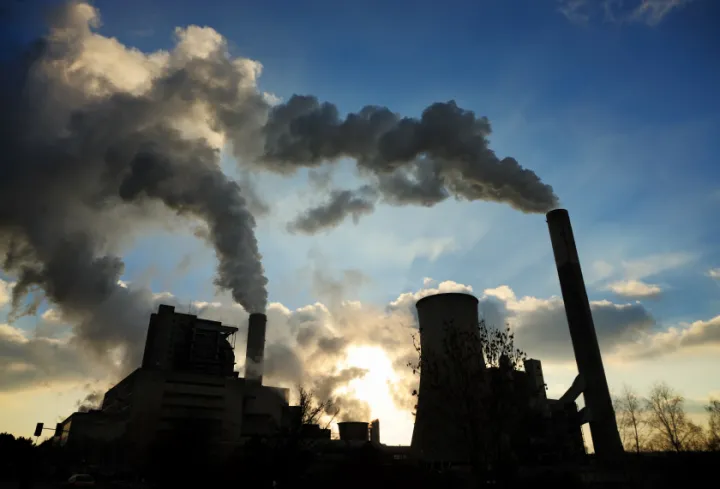
Carbon offsets, carbon cap and trade, carbon tax -- the jargon can seem like gobbledygook. While scientists gather the data and create the models about climate change, citizens are the ones who must act. The debate is happening now: do we continue burning fossil fuels at the same rate and prepare for living on a warmer planet? Or do we enact laws to enforce curbs on emissions at all levels -- individuals, companies, and entire countries? What will we choose?
Cultural Connections
Fisheries

Around the world, sea creatures are on the move because of climate change. In 2007, a massive swarm of a jellyfish normally found in the Mediterranean destroyed a salmon farm off of Northern Ireland, stinging more than 120,000 fish to death. In the North Sea, nearly 2/3rds of all marine fish species shifted either their latitude or water depth. A recent UN report paints a bleak picture – the most productive parts of the ocean are on the edge of collapse due to a lethal combination of climate change, overharvesting of fish stocks, invasive species, pollution, and coastal development.
Where are they going? Some animals are forced to swim to new areas to stay in a comfortable, cooler temperature range. Others follow their food to new regions of the oceans. But some animals, such as jellyfish and humboldt squid, are taking advantage of the changes to expand their ranges. Jellyfish thrive in warmer waters, so the rising temperature helps them thrive. Humboldt squid are well-adapted to low-oxygen water -- but why is there more low-oxygen water? As jellies and other planktonic life are boosted by the warming waters, their increased breathing may be actually using up enough oxygen in the water to expand the squids' favored oxygen-poor habitat.
Copenhagen Summit

Aspirations, yes. Action, not quite. In December 2009, the United Nations held its 15th Summit on Climate Change in Copenhagen. Many heralded the event for being an unprecedented meeting of heads of state to seriously discuss climate change. But others were disappointed in the final wording of the Accord. Read it here and judge for yourself.